
Hip osteoarthritis
What is hip osteoarthritis (osteoarthritis of the hip)?
Hip osteoarthritis (arthritis of the hip) is a very common joint disease that usually affects the knee, hip, finger and spine joints. The cartilage in a joint ensures that it glides smoothly and provides stability to the joint. In osteoarthritis, the balance between the body's maintenance of cartilage and the wear and tear that the cartilage is exposed to when we move in everyday life is disrupted. The wear and tear begins to occur faster than the build-up and the cartilage begins to thin, become uneven and the glide deteriorates.
The most common age of the person affected is over 45. The distribution is equal between women and men. In most cases, it is unclear why people get osteoarthritis. A connection has been seen between jobs that are one-sidedly stressful. Heredity is thought to play a role. A previous injury to the affected area can lead to an increased risk of osteoarthritis later in life.
The medical term for hip osteoarthritis is coxarthrosis. In everyday language, we can call it wear and tear on the hip.
Part of the diagnosis may be to x-ray the joint, which can show the thickness of the cartilage and the degree of wear. However, this is not necessary if the patient's story and our examination clearly point to osteoarthritis.
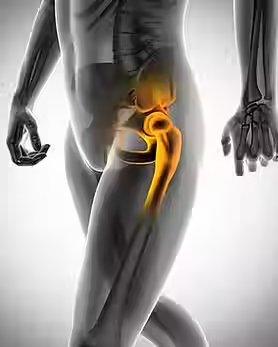
Symptoms of hip osteoarthritis
The most common symptom is that it starts with pain and stiffness when you first get up in the morning and when you stand up after sitting for a while. Later, there is often increased stiffness in the hip and pain at rest. The pain is often localized to the front of the hip, groin and can radiate down towards the knee. Lifting or pulling the knee towards the stomach, bending forward to tie your shoes can, for example, trigger the pain.
The symptoms often come in fits and starts, where the symptoms intensify either without a clear cause for the patient, or the hip has been loaded more than it can tolerate, resulting in increased pain.
Treatment for coxarthrosis
A common prescription from the doctor is an anti-inflammatory course to try to reduce the pain and any swelling in the joint.
Our physiotherapists try to identify together with the patient what in everyday life triggers the problem. What should be avoided and what is recommended to be done. We look at how the patient walks and pay attention to any limping. A crutch on the opposite side of the pain relieves the hip and probably reduces the limping. The physiotherapist notes the mobility of the hip and in which positions the pain occurs.
Of great importance is to try to counteract continued increased stiffness and impaired function in the hip with rehabilitation training. We develop exercises for mobility and to improve coordination in the hip, knee, foot. We try out exercises to strengthen the muscles around the hip that do not increase the problem.

In terms of treatment, stretching of the hip, traction can have a calming effect. If the muscles around the hip are affected by having had pain and limping for a longer period, we treat it.
Reducing any excess weight puts less strain on the hip.
Prognosis for hip osteoarthritis
Osteoarthritis develops slowly in most cases. The majority of those affected do well with exercise and anti-inflammatory medication when necessary. Approximately 30% of those affected by osteoarthritis eventually undergo surgery where the hip joint is replaced with an artificial hip, a hip prosthesis. This is often caused by serious everyday problems and not infrequently the patient has rest pain at night that affects sleep. The normal patient can live an active life after such an operation and get rid of the pain.

