
Periostitis
What is periostitis?
The medical term for periostitis is periostitis and in English it is called shin splints. All bones are covered by a periosteum which is sensitive to pain. It is now believed that this condition is a stress reaction/overstrain of the periosteum on the shinbone (tibia) and not an inflammation as the name suggests.
This diagnosis causes pain primarily in the front/inner side of the shinbone. This usually occurs in connection with brisk walking or running, when you have increased the length, intensity, changed the surface or if you start/resume running or walking. It is easier to get this problem if you have high or low arches. Stiffness in the calf muscles can also be an underlying cause of this problem.
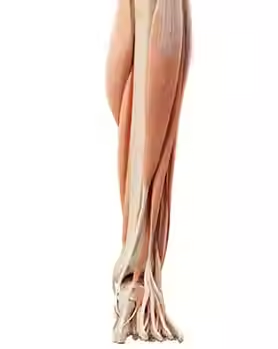
Symptoms of periostitis
Pain in the front of the lower leg when running and walking. In the beginning, the pain often comes after a run or walk. If the symptoms worsen, there is usually pain even during activity. The legs can feel stiff when you get up and walk after sitting for a while. You also feel tender on the front, inside of the shin. There is a suspicion that periosteal inflammation can be a precursor to a stress fracture. In other words, there is good reason not to ignore the pain.
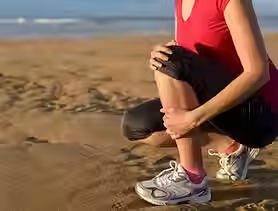
Treatment of periostitis
First, we recommend that the patient refrain from running and brisk walking and instead do exercises that do not put a lot of stress on the lower legs, such as strength training, cycling or swimming. Our physiotherapists examine the foot position and mobility in the foot and knee joints. We can produce anatomical shoe inserts to support any misalignment in the foot or ankle. For periostitis, we set up a gradual rehabilitation training program with a focus on stabilization and mobility training for the foot and lower leg. An alternative is that we perform a medical running analysis to be able to optimize the running stride if necessary. At Alta Vita Physiotherapy, we also have the option of treating with shock wave therapy, which is a good option for reducing pain and speeding up healing in the area.
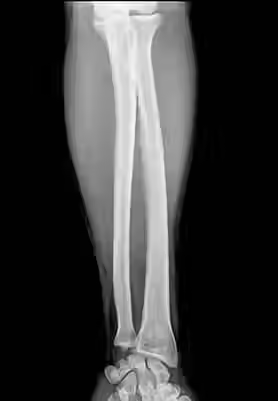
Forecast
The prognosis is good. Most people recover within 2-3 months, provided that you do not trigger the symptoms by returning to running or walking too early. If the symptoms are severe and long-lasting, surgery may be necessary.
Differential diagnoses
Other causes of lower leg pain may include compartment syndrome, stress fracture of the tibia, or nerve damage that triggers discomfort in this area.
