Trochanteritis
What is trochanteritis – bursitis?
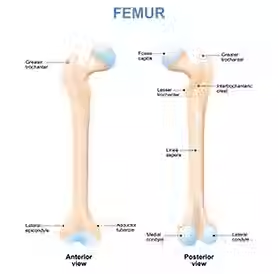
On the outside of the hip you can feel a larger bone bump called the greater trochanter, which is the upper, outer bone protrusion of the femur. This is an area where a number of muscles attach. The back where the gluteal muscles attach, the top with the attachment of muscles from the upper part of the hip and the front where some of the muscles of the front attach. To provide cushion between different muscles and tendons, there are a number of bursae in the area. In trochanteritis - bursitis, inflammation has occurred in the tendon or tendon attachment on the greater trochanter, or alternatively, inflammation has occurred in one or more bursae. You can also have a combination of these. Usually this is located on the back or top of the greater trochanter.
This is a relatively common diagnosis that often occurs when there is a change in movement pattern, such as increasing the amount/length of walking or running in a short period of time. Sitting and working unilaterally with your feet, for example with pedals, can be a cause of this diagnosis. Other causes can be low arches (pronation), knee misalignment, falls with trauma to the outside of the hip, hip osteoarthritis. If you walk with a limp for some reason, trochanteritis/bursitis can occur as a result.
This most commonly affects middle-aged people. More common among women than men.
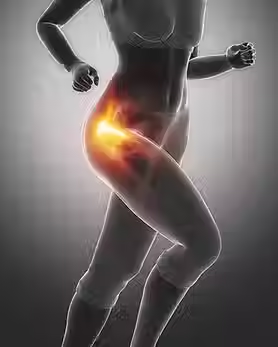
Symptoms of trochanteritis/bursitis of the outer hip
Pain when putting pressure on the outside and/or back of the hip. Sometimes the pain can also radiate down the outside of the thigh. Often, you experience increased pain if you have been sitting for a long time and then have to stand up. The pain usually decreases after walking for a short while. Longer walks, running, climbing stairs, and walking uphill can trigger the pain of trochanteritis/bursitis. Lying on the affected side can hurt. Sometimes it can even hurt at rest.
Treatment for trochanteritis/bursitis
It is important for us physiotherapists to identify, if possible, what has caused the discomfort. Often this involves initially resting from that activity. An examination is done to see if there are any anatomical malpositions, muscle imbalances and to get a picture of how limiting the discomfort is for function.
Shockwave therapy in combination with rehabilitation training is common in cases of trochanteritis/bursitis. If the patient pronates, the option of anatomical shoe inserts is offered. Before returning to any running, a running analysis is often performed, or a gait analysis if you normally walk a lot. If the pain is severe or if the symptoms do not go away after a treatment, we can perform an ultrasound diagnostic examination. Here we can clarify whether it is an inflamed tendon or bursa. If it is bursa inflammation, we will decide together with the patient whether to give an ultrasound-guided cortisone injection into the bursa to reduce the inflammation and pain. In a way, this can make it easier to start rehab training, or to have better success with rehab training that is already underway.

Prognosis for trochanteritis
The prognosis is good. Especially if we can find out what caused the problem. Most of our patients recover from their problems. However, the rehabilitation time varies depending on how long the patient has had their problems before they come to us, how serious the problems are and whether the patient follows our advice. In very rare and difficult cases, we can refer the patient to an orthopedist for a decision on possible surgery.