
Herniated disc in the neck
What is a herniated disc in the neck?
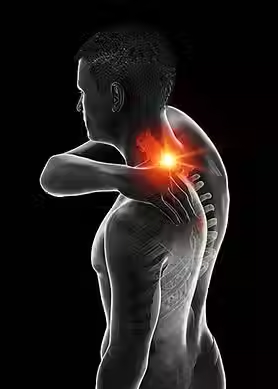
The Latin name for the neck is cervical. So on a referral from the doctor it may say Cervical herniated disc. The neck consists of 7 vertebrae and between each vertebra in the spine there is a disc. The disc consists of a gelatinous core and a harder outer covering. The disc's job is to absorb the load that the back/neck is exposed to and enable movement between the vertebrae. The head weighs approximately 5 kg, which puts a considerable load on the lower part of the neck in particular during sudden movements and jumps. In the case of a herniated disc in the neck, the outer covering ruptures and the gelatinous mass in the core of the disc protrudes and can press against the nerves, spinal cord and ligaments. This most commonly occurs in the lower part of the neck, which is most exposed to strain. The nerves in this area control force, pain, and sensation out to the shoulder, arm, and hand. So depending on the level at which the herniated disc is located, different parts of the arm or shoulder are affected. A herniated disc in the neck can occur acutely after an odd strain on the neck, for example a jump, jerk or fall with a rapid onset of symptoms. It can also be the result of long-term strain that has been aggravated by, for example, poor posture, a work position with static strain on the neck or monotonous movements. In these cases, the disc gradually wears out, the height between the vertebral bodies decreases and the nerves in the area become cramped, with increased discomfort as a result.
After the lumbar spine, it is most common to get a herniated disc in the neck and it is a relatively common diagnosis. The risk increases between the ages of 40-60, if it runs in the family and if you smoke.
On the left of the picture you can see the vertebral body facing forward towards the neck. On the right you can see the nuchal processes which we can feel as hard lumps in the middle of the back of the neck, especially in its lower part. The disc sits between the vertebral bodies and is beige in color in the picture. The nerves are yellow. The red is supposed to represent a herniated disc that is pressing against the nerve as in the case of a herniated disc.

Symptoms of Cervical Disc Herniation
Moderate to severe pain down the shoulder, arm, hand is common. It is most common for one side to be affected. How the spread looks in more detail depends partly on which level in the neck the herniated disc is located, and which part of the nerve is affected (sensation, strength, pain). Some people have the most problems with numbness/tingling in, for example, the forearm/hand. Others have pain and/or reduced strength in the shoulder, arm, hand. The problems are often affected by the head position. It is relatively common for the patient not to have pain in the neck, even if the problems come from there. The symptoms are partly due to the mechanical pressure on the nerve, spinal cord, ligaments and can also be due to a chemical effect in the area around the nerve where the gelatinous disc nucleus has protruded.

Treatment for herniated discs in the neck
Part of the treatment is to correct posture if necessary and see if it can relieve symptoms. We review and adjust the working posture and any exercise. We give tips on positioning and pillows if nighttime pain is a problem. The manual treatment is characterized by "less is more". It is common for light stretching of the neck, tractions are trial treatments and what we start with. Initially using other local treatments for the neck can easily increase the symptoms temporarily, which is undesirable for both us and the patient. If the symptoms ease after 3-4 treatments in combination with the other tips, we can test whether it is possible to treat more locally to release muscular tension and increase mobility without triggering the symptoms. We also gradually start with exercise rehabilitation to restore function. This is an example of how it can work. We adapt the treatment plan to each individual patient, to find an optimal plan.
Forecast
A herniated disc with moderate symptoms often gets better without treatment. With the right treatment, we can often shorten the period of discomfort and make it clear to the patient what they should avoid and do to minimize this from happening again. In a few cases, where treatment does not lead to improvement, surgery may be necessary.

