
Neck restraint
What is neck lock (stiff neck)?
A stiff neck (a stiff neck) is caused by a muscular spasm in the neck and is the equivalent of what is called a hunchback in the lumbar spine. The medical term for this is torticollis. The human head weighs 4-5 kg and the neck muscles, together with the skeleton, are responsible for keeping the head up so that we can see and take in information about the situation around us. The work that the neck muscles do is very intricate and requires coordination. Sometimes there is a breakdown in the system and the spasm occurs. This is common and affects most people at some point in their lives. This can occur if you do an activity that your neck is not used to, such as fast movements, jumping movements or painting a roof where you look up much more than usual. If you happen to lie in an odd position with your neck, it can occur while you are sleeping and you wake up with a stiff neck. Sometimes this occurs without you being able to identify the cause. If there is wear and tear in the neck joints or discs, this may be an underlying cause of the muscles going into a state of spasm and creating recurring neck stiffness.
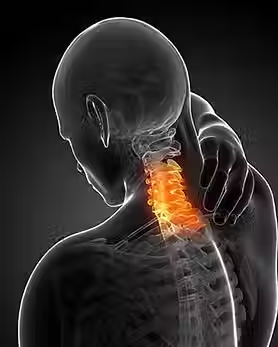
Symptoms of neck lock
Neck pain often begins with rapidly increasing pain and stiffness in the neck that is provoked when you move your head. Most often, you have more discomfort locally on one side of the neck. It can also hurt when changing positions while lying down. Sometimes the pain can radiate down to the shoulder or arm, but it is most common for it to stick to the neck and the transition to the thoracic spine. If the discomfort is intense, it can be difficult to keep your head in a neutral position without pain, which leads to increased tension and even more pain.

Treatment for neck lock
In most cases, a neck lock will go away in a couple of days without treatment. If it does not go away, manual treatment can usually shorten and relieve the pain period. When we see these patients, we talk through the course of events, examine them and make sure that it is a case of torticollis/neck lock. We then carry out manual treatment with the aim of reducing the spasm, improving mobility and restoring function in the neck. Shockwave therapy is also an effective treatment option for relieving spasming muscles. We provide information about ergonomics regarding posture and working position if necessary. Circulation and mobility-promoting exercises are instructed.
Anyone can experience neck stiffness. It is only when it is a recurring problem that more in-depth training rehabilitation may be necessary to improve coordination in the neck and shoulder area. We can also refer the patient to an orthopedic surgeon to see if there is osteoarthritis or an oddly placed herniated disc in the neck.

Prognosis for torticollis
The prognosis is very good in most cases. We can resolve mild neck stiffness with a couple of treatments. If it has been present for a longer period, we may have to treat the neck a few more times before it goes away. The times we are not successful with the treatment, it is almost always because there is another diagnosis that is the basis for the symptoms, such as a herniated disc or osteoarthritis. In the acute stage, everything can look like a neck stiffness, but when the symptoms during the treatment period do not follow the usual pattern, suspicion of another diagnosis may be raised and we may have to change the treatment strategy or refer the patient further.
